 China AI Hub
Technology / AI Agents
AI Agents
An AI agent is a system in which a language model acts autonomously toward a goal — planning, calling tools, observing results and iterating — rather than producing a single response to a single prompt.
Technical background
The term “agent” escalated from single-call tool use to multi-step autonomous systems during 2023-2025. The engineering consensus (see Anthropic’s “Building Effective Agents”) is that agentic patterns — tool loops, planning, multi-agent delegation — are the practical form; “agents” are not a separate model class but a system design on top of capable models.
How it works
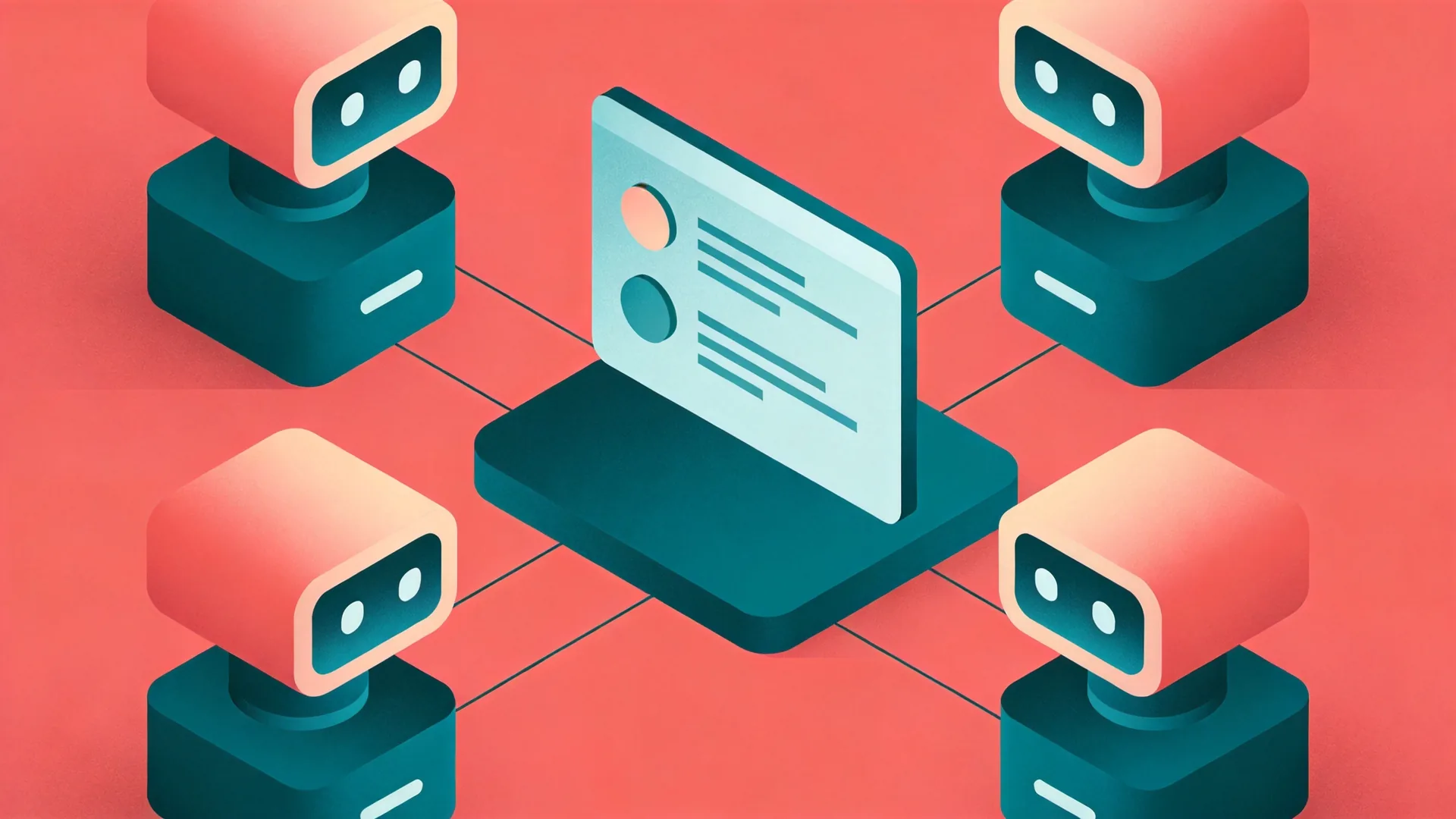
An agent loop is: model plans a step, calls tools (search, code execution, browser, APIs), receives observations, and continues until a stop condition. Supporting machinery includes memory (short- and long-term), planning strategies, and guardrails. Multi-agent systems split roles — planner, coder, reviewer — each with its own model and tools.
Why it matters
Agents turn language models from answerers into workers: they can operate software, browse the web, and complete multi-hour tasks. Agent capability is now a first-class model attribute — several models in the China AI Hub database list it explicitly.
Chinese adoption
China’s agent ecosystem is deep. The China AI Hub agent database tracks ten Chinese agents (last verified 2026-09-22) spanning coding agents (Qwen Code, Kimi Code, MiniMax Code), frameworks (DeepSeek Harness, Qwen-Agent), autonomous agents (AutoGLM, Doubao App), and coding plans (GLM Coding Plan, Qoder). Seven of ten list MCP support; seven list computer use. On the model side, Kimi K3, Qwen3.8-Max, Doubao Seed 2.1 Pro and MiniMax M3 all list agent capability.
Major Chinese companies and models
- DeepSeek — DeepSeek Harness: open-source agent framework (Cordis-based), MIT, self-hosted.
- Alibaba Cloud — Qwen Code and Qwen-Agent (open), plus Qoder.
- Zhipu AI — AutoGLM (open) and GLM Coding Plan.
- Moonshot AI — Kimi Code (open, MIT) with browser/computer use.
- MiniMax — MiniMax Code (open) and MiniMax Agent (cloud platform).
- ByteDance — Doubao App with computer-use “Work” mode.
Practical applications
Software engineering (multi-file edits, test loops), web research and form-filling, data extraction pipelines, autonomous computer operation, and customer-support workflows.
Limitations
Autonomy implies failure modes: loops that burn tokens, tool misuse, and compounding errors over long tasks. Long-horizon reliability is still the open problem. Capability labels in our database are vendor-reported unless independently benchmarked.
Deployment considerations
Use simpler workflow patterns where they suffice; add budgets, checkpoints and human approval for irreversible actions; sandbox code and browser tools; monitor token spend per completed task, not per call.
Future development
Agents are absorbing computer use and browser control as standard tools, standardizing inter-agent communication (MCP, A2A), and moving toward persistent memory and multi-day task execution.